Where Science and Art Meet: The Path of Innovation
“The arts and sciences are essential to the prosperity of the state and to the ornament and happiness of human life” -George Washington
We continue the journey sparked by revisiting my opinion, or more accurately my initial dismissal, of the portrait of Antoine and Marie Anne Lavoisier by Jacques Louis David. My meandering thoughts lead me to ponder on the meeting between art and science. Two disparate fields that don’t just intersect but walk the same path of innovation. You might say that they are different, that science gives us tangible things, but I would like to argue that art does as well. Let’s revisit the Lavoisier’s and the works of David. David’s paintings in the years leading up to the French Revolution were influential in expressing and spreading an idea. He was influencing thought and opinion, no different than influencers today on social media. We can call these paintings the awaited-gram. Just think about how these paintings were revealed. Their unveilings were social events that attracted crowds — the who’s who. I like to think of it much like the film festival premieres of today. People, of certain groups or circles, show up ready to see what’s new, ready to talk, gossip, and network. Then the talk and reports of the event would spread throughout to those that couldn’t attend.
What David propagated through his style of neoclassicism were the ideals of the Roman Republic, through scenes from the classical era both historical and mythological. He was inciting the ideals of a republic, not a monarchy and the rococo style that epitomized it. He represented the rejection of the rococo style and what it stood for. The acceptance by society of his works propagated the acceptance of these ideas as well. His artwork became the visual message of the revolutionary thinking, particularly the Jacobin’s radicalization of the French Revolution. His paintings sold a narrative, as well as created martyrs for the cause with works like the Death of Marat and Death of Young Bara.
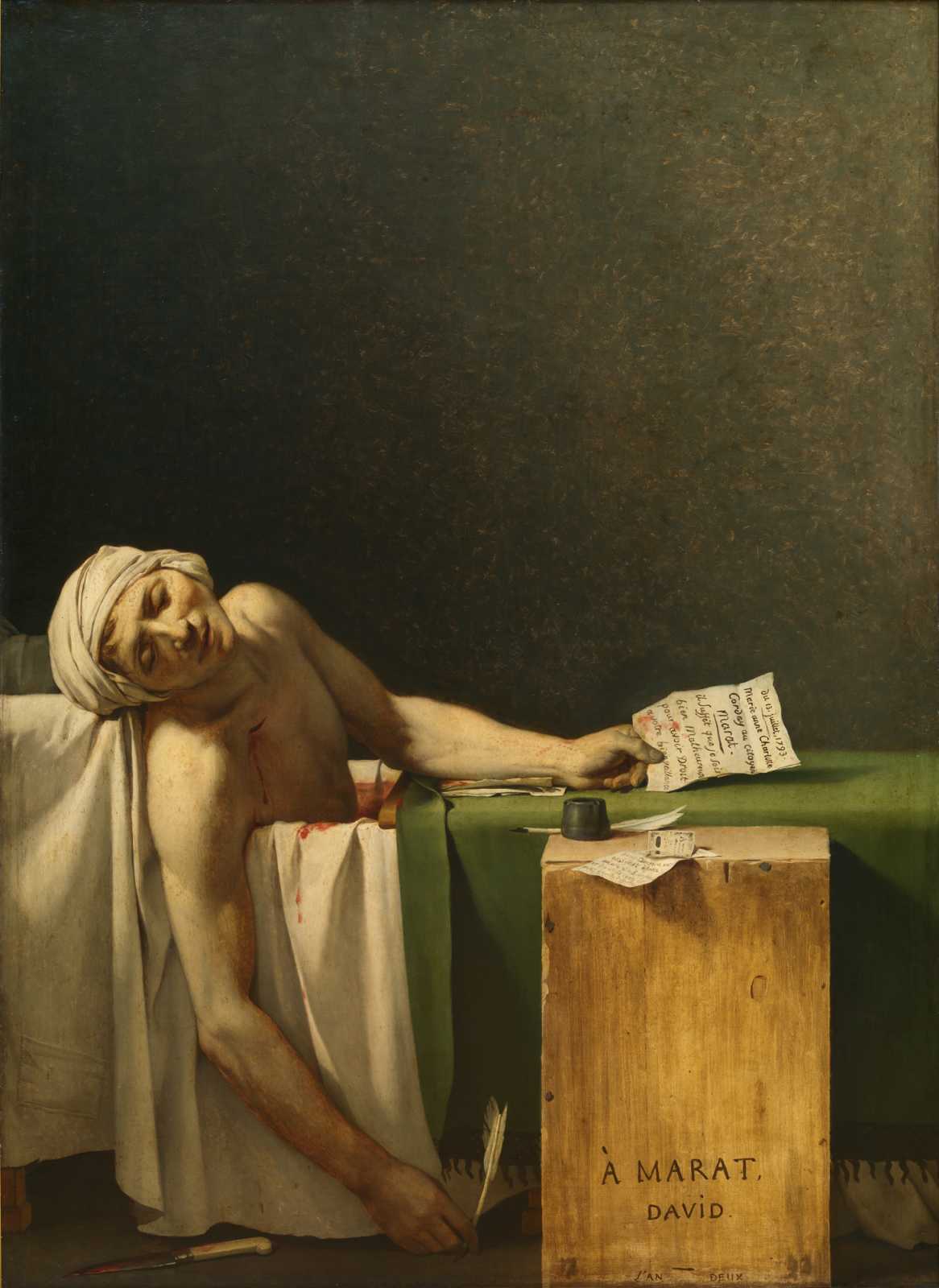
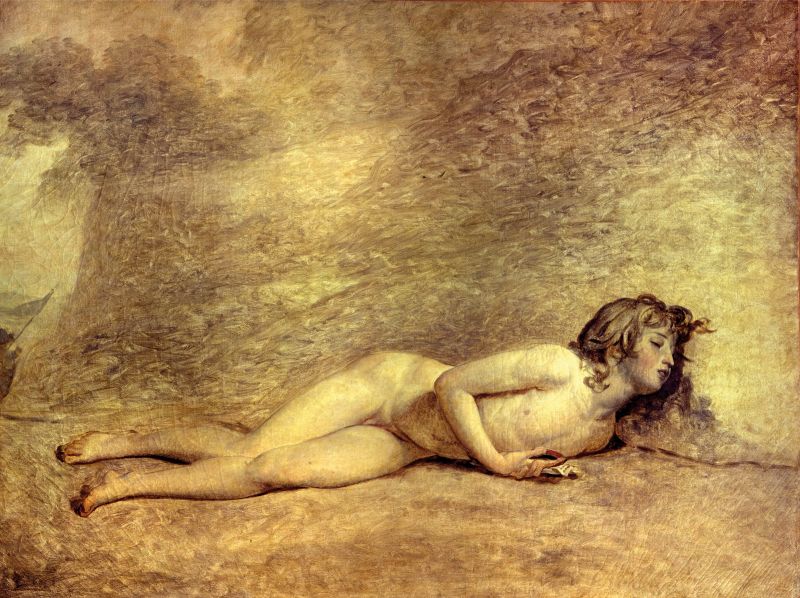
Jacques Louis David: (left) The Death of Marat Courtesy of Royal Museums of Fine Arts of Belgium; (right) The Death of Young Bara Courtesy of Musée Calvet.
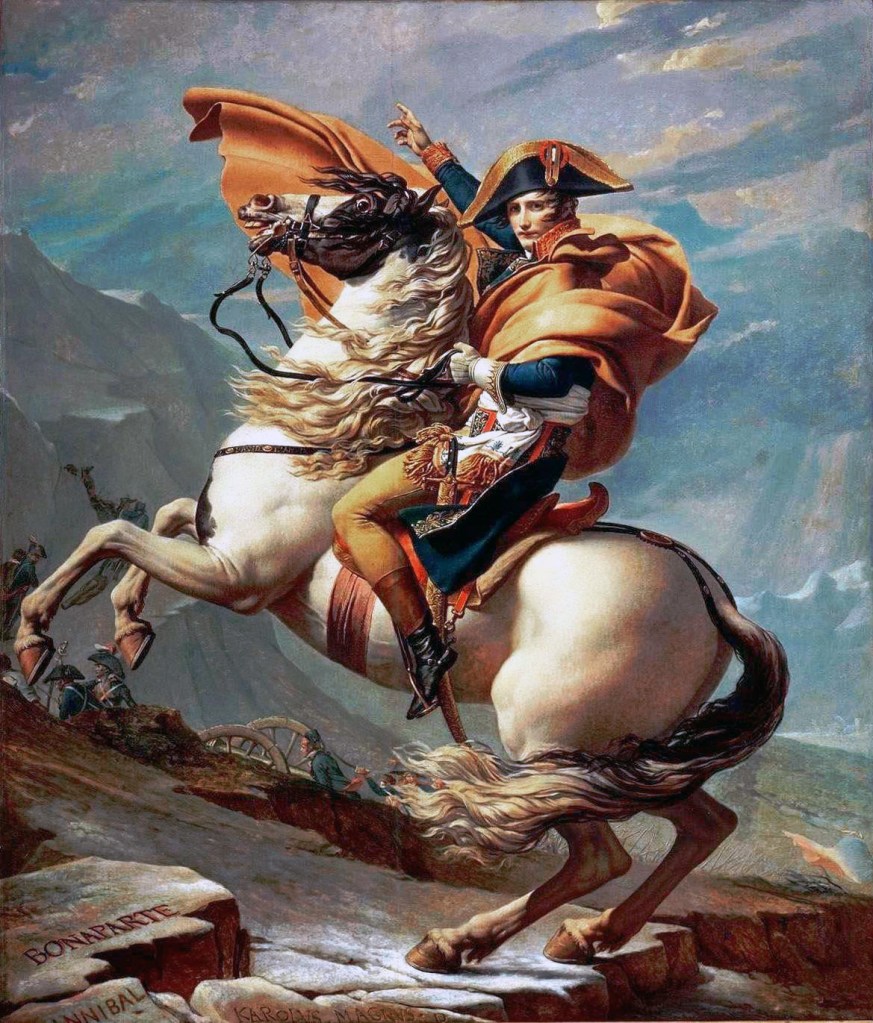
Later on, through the rise of Napoleon, David created several paintings of Napoleon including the infamous Napoleon Crossing the Alps. Again, selling the propaganda of the new establishment. This is just one of the ways art can innovate. It can transform social thinking; it can create conversations that spark, spread, or reinforce ideas. It simply makes people ponder, and he accomplished this in part by making people look to the past.
Likewise, the Lavoisier’s were also able to innovate by looking to the past. They studied the alchemical hypothesis of phlogiston to unlock the mystery of the chemical processes that were not fully explained by it. They not only conducted their own experiments but re-created and studied previous experiments. They questioned the flaws on accepted ideas. The Lavoisier’s works gave us among other things the understanding of the element of oxygen. Their published theory on oxygen and the process of combustion revolutionized science. Take a moment to think of how this transformed what people knew. The theory of oxygen that the Lavoisier’s published not only explained combustion but that this same process is how respiration worked. Not to sound macabre but death by suffocation or drowning would have been confounding were it not for the fact that people knew the human body needed to breath to live. Yet we could not explain how it worked until the Lavoisier’s studies. And this new understanding resulted from revisiting a concept and wondering if we actually understood it or was there more to it than what we thought we knew. The Lavoisier’s works paved the way towards modern chemistry and the dissolution of alchemy.
This is how art and science walk hand in hand. Often the same character traits of scientist and artist run parallel. The skill to follow a thought meticulously and letting the results speak for themselves. The mindset of not letting the thought drive you to a conclusion already predetermined. This requires an open mind, a willingness to change direction, and accepting the results. This is a skill artist and scientist have in common along with the talent of observation, knack for detail, and over thinking sometimes. There is a lot of forethought in conducting an experiment, but also in composing a work of art. Even what we perceive as chaos in art is made with intent.
The path of innovation is one that I think is crucial for everyone to embrace. What is innovation if not the process of transformation — of change. But change can be a double edged sword. It can be illuminating but the process often upsetting as we bring order to the confusion and chaos it might incite within us or around us. It is a path that requires the ability to think, rethink, and allow yourself to discover. It requires time, intention, and most importantly allowing yourself to take that time and not letting that curiosity go. We need to allow ourselves to indulge these curiosities and stop saying “I would like to.. .but later I’ll have time”. Even if only a little, we can all spare a moment to wander a bit. We think that only professional thinkers are allowed to do this. We don’t all have to be prodigies and discover something revolutionary to humankind. But we can still transform ourselves and revise our opinions by learning from the path of innovation. It is about learning to not ignore when that innate curiosity beckons you to explore. For me, intentionally walking the path of innovation led me to revise, on this occasion, my opinion that portraiture was inconsequential. I took a step back and wondered why I was so dismissive and attached to that notion. I let myself wander into a space I thought I knew and asked myself if there was something I had not seen or considered before. And the answer was a resolute yes!
If you are thinking that my meandering is done… you are mistaken, because there is more this one portrait inspired. And this is what I mean by meandering. Sometimes it loops back around but takes you somewhere new. Now that I had revisited and revised my opinion of what portraiture can convey, I studied the portrait again and saw it with an open mind. I found myself focusing on Marie Anne Lavoisier whereas before I dismissed her entirely. To be fair I wasn’t just dismissing her but the entire composition. Nevertheless I dismissed her. Now all I see is Marie Anne as the focus of this piece and she is where I will pick up on part 3 of this series.

 Sense of Wonder